

Newsletter Subscribe
Enter your email address below and subscribe to our newsletter


From the melodies of hope to the erosion of personal freedom and human relevance
I was born in the 1940s, into a world emerging from war, exhausted but hopeful. We were weaned on the gentle melodies of Frank Sinatra, Bing Crosby and Nat King Cole. Their songs spoke of love, longing, loneliness and the promise of tomorrow. Even sadness had a melody. Romance was cherished, and the future something to anticipate.
The 1950s brought Elvis, Buddy Holly and rock and roll. Youth found its voice. We challenged convention without abandoning romance. Beneath the excitement remained a simple human yearning: to love, to belong, to be touched and to matter.
Then came the 1960s. John Kennedy’s Camelot captured our imagination. We would go to the moon, conquer disease, overcome prejudice and build a more just society. The Beatles sang of holding hands. Martin Luther King dreamed of equality. For a brief moment, idealism seemed capable of overcoming history.
Then Dallas.
Vietnam, assassinations, protests and social upheaval shattered our confidence that progress was inevitable. Yet even rebellion carried a melody. Bob Dylan asked questions. Simon and Garfunkel searched for meaning. The young challenged authority, not simply to destroy institutions, but to make them more humane. Continued below.
Live Podcast
Thursday October 22, 2026
3:30pm PT | 4:30pm MT | 6:30pm ET
No need to register. Just Zoom in: https://us02web.zoom.us/j/84258596166?pw
Last week’s Podcast Recording:
Sovereignty Matters. But Safety Comes First. – HERE
Continued from above
The decades that followed delivered extraordinary prosperity, technological achievement and growing contradictions. We became wealthier, healthier, better educated and more connected than any generation before us. But communities fragmented, institutions grew larger, and citizens increasingly became clients, customers, taxpayers and data points.
The digital revolution promised knowledge and human connection. Instead, its commercial offspring discovered that fear, anger and resentment were profitable. We confused communication with connection, information with wisdom, and visibility with relevance. Political debate became ideological warfare. Compromise became weakness, and disagreement a reason for exclusion.
The melody had not entirely disappeared. It was becoming harder to hear above the noise.
And beneath that noise lies a fundamental question: What has happened to personal sovereignty?
Sovereignty is usually discussed as the authority of governments to govern. But its ultimate purpose should be to preserve the freedom, dignity and relevance of the individuals they serve.
That brings me to Alberta’s October 19 referendum. The question is whether Alberta should remain in Canada or begin the legal process toward a future binding referendum on separation. Léger’s October survey found 70% favour remaining and 22% favour beginning the separation process.
But remaining need not mean accepting the status quo. Nor does separating guarantee greater freedom.
Alberta’s grievances concerning federal intrusion into provincial jurisdiction deserve serious consideration. Constitutional powers over healthcare, education and natural resources matter. So do freedoms of speech, assembly, enterprise and personal choice. Yet sovereignty involves more than constitutional boundaries.
A recent discussion I moderated between separation advocate Keith Wilson and Bill Jones, representing the position of preparation, exposed an important distinction. Keith argued that Alberta possesses the resources to become independent. Bill questioned whether Alberta has the institutions necessary to function as a sovereign state.
His challenge was simple: “You’re preparing after the vote. I’m saying prepare before the vote.”
That principle deserves attention regardless of one’s position. A sovereign Alberta would require credible fiscal and financial systems, trade arrangements, justice and policing, defence relationships, protection of Indigenous treaty rights, and secure communications and data infrastructure. Preparation and public accountability are possible now.
Sovereignty is not merely the freedom to choose. It is the capacity to live responsibly with the consequences.
There are threats to sovereignty that neither separation nor existing constitutional arrangements can resolve alone. Global public debt is approaching the size of annual economic output. Canada’s fertility rate is falling, populations are aging, and institutional trust is weakening. Many citizens doubt whether their voices matter.
Artificial intelligence introduces another frontier. Data centres may require trillions of dollars in investment, while machines compose music, write poetry, diagnose illness and imitate affection. Knowledge, once a foundation of individual relevance, is becoming a commodity.
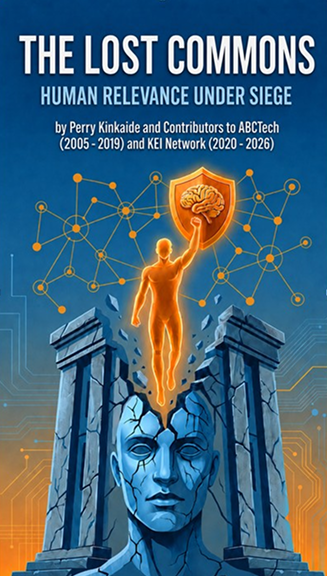
This is the concern explored in The Lost Commons: Human Relevance Under Siege: we risk creating a civilization of astonishing technical competence but diminishing human purpose. The human commons—belonging, trust, intimacy, responsibility and hope—is being eroded by systems that make us more efficient while making us less necessary to one another.
Here is the connection between the music of my youth and today’s sovereignty debate: both concern the erosion of something once taken for granted—the belief that the individual matters.
At 84, I wonder whether we have mistaken material progress for human progress. We have conquered distance and multiplied choices while diminishing our capacity to belong.
Alberta’s referendum offers an opportunity to examine sovereignty broadly. The question should not end with Stay or Leave. It should extend to what kind of society we wish to become, what institutions we need, and how we restore the relevance of the people those institutions exist to serve.
Sovereignty without humanity is merely another arrangement of power.
We need institutions strong enough to protect us, yet restrained enough to respect us. We need technology that serves human purposes rather than defining them. Above all, we need to restore hope.
Perhaps the melody is not gone. Perhaps we have simply forgotten how to listen.
In time we touched—and were touched. Our loves and lives would never be the same.
That was the promise of yesterday.
It remains the possibility of tomorrow.