

Newsletter Subscribe
Enter your email address below and subscribe to our newsletter


Ageing is testing what we can afford—and what we must relearn to value.
Canada is growing older. That is hardly news. What is new is the convergence of demographic, economic, scientific and institutional pressures challenging the assumptions on which our prosperity and public services were built.
Fewer children are being born. The proportion of older Canadians is rising. Governments face mounting expectations for healthcare, pensions and public services. Meanwhile, researchers are exploring whether medicine might one day address the biology of ageing itself rather than simply manage its associated diseases. One future points toward greater dependency, fiscal pressure and institutional strain. Another offers the prospect of longer, healthier and more independent lives. Both challenge the status quo. But the reckoning goes deeper: have we confused the cost of healthcare with the value of caring? Continued below
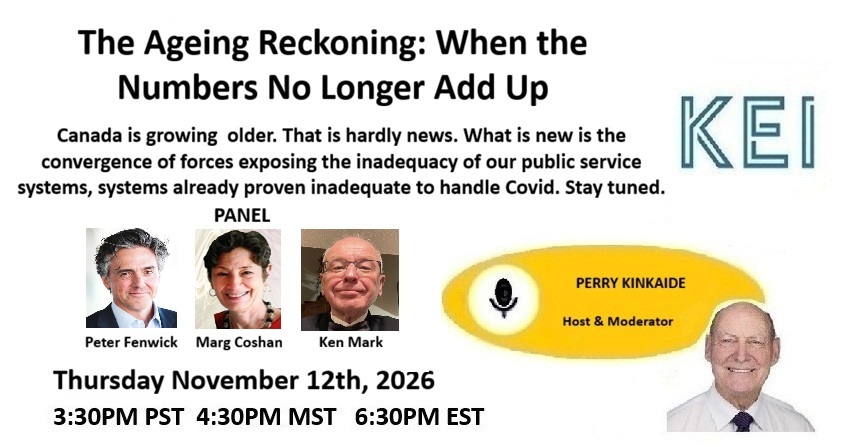
No need to register, just zoom in: https://us02web.zoom.us/j/84258596166?pw
LAST WEEK’S PODCAST RECORDING: Canada’s Dilemma: Sovereignty and National Security HERE
Continued from above
Why this conversation is timely. As of July 1, 2026, about 20% of Canadians were 65 or older, compared with roughly 15% aged 14 and under. Canada’s fertility rate stood at 1.26 children per woman in 2025. The balance between generations is changing, with consequences for the workforce and the services it helps finance.
The Canadian Institute for Health Information estimated national health spending at $399 billion in 2025—about $9,626 per Canadian, or 12.7% of GDP. Ageing is only part of the pressure. Population growth, inflation, treatment costs and rising expectations also matter. The figures do not prove that publicly funded medicine is about to collapse. They do challenge the assumption that ever-greater spending alone will deliver the care Canadians need.
The economic paradox. For generations, expanding workforces and rising productivity helped governments finance growing public programmes. Ageing changes that equation. Older Canadians remain contributors through paid work and taxes, but also through caregiving, mentoring, volunteering and the passing on of experience. Much of that contribution barely registers in the financial measures by which we judge prosperity.
Immigration can strengthen the workforce when newcomers are prepared and communities can accommodate them. Artificial intelligence and automation may raise productivity. Neither automatically resolves obligations that outpace the capacity to meet them. Borrowing only postpones the reckoning if it fails to build that capacity.
Older Canadians need dependable support. Younger Canadians need the opportunity to build lives of their own. A system responding to every pressure mainly by adding facilities, personnel and interventions risks becoming less affordable without necessarily becoming more caring.
What our accounts leave out. Modern medicine’s achievements are considerable. Medicines, equipment and skilled clinical interventions save lives and relieve suffering. Yet Canada spends heavily on healthcare while patients still encounter long waits and limited access to essential services. Expenditure is measurable; the experience and outcomes of care are harder to capture. Our accounts record buildings, procedures, equipment and payrolls. They are far less capable of recording compassion, trust, companionship, independence and the reassurance of human presence. In a system preoccupied with treating conditions, the person living with the condition can become less visible.
Relationships, practical knowledge and mutual responsibility are intangible assets. They are not substitutes for professional medicine, but indispensable complements. Their value does not disappear because it cannot readily be entered on a balance sheet. Nor should exhausted relatives be treated as an unlimited supply of unpaid labour: shifting costs onto families is not the same as improving care.
Health is the objective. Care is the human relationship through which much of its value is realized. What if our measure of success began not with what the system purchases, but with what people can continue to do, experience and value?
Could medicine change the equation? Research into the biological mechanisms of ageing raises the possibility of extending healthy life. If people remain capable and independent for more years, retirement, employment, caregiving and the demand for medical services could all change. Governments should prepare for scientific progress without depending on breakthroughs that have yet to be proved.
But scientific ambition is not the same as human purpose. Relief from disease, preservation of independence and postponement of death are related goals, not identical ones. More years may be welcome. Their worth also depends on how those years are lived, whose choices they respect and whether new treatments are fairly accessible.
If death is understood solely as the loss of biological life, extending life can become an objective without a clear limit. Where do comfort, personal wishes, belonging and dignity enter the calculation? A life’s influence through love, knowledge and relationships cannot be reduced to its duration.
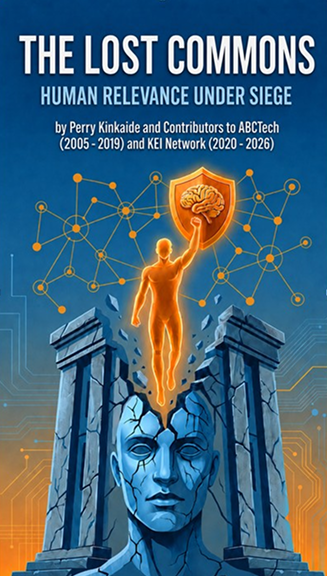
Institutions and the people they serve. In The Lost Commons: Human Relevance Under Siege, I described the “institutional antibody”: the tendency of established organizations and professions to resist changes that threaten familiar structures and practices. Ageing presents another test. Institutions must adapt to new realities without losing the trust of those they exist to serve.
That means asking less often how we preserve existing arrangements and more often what those arrangements enable people to do. Are patients heard? Are caregivers supported? Is independence protected where possible? Are the outcomes people value given the same attention as the services we count?
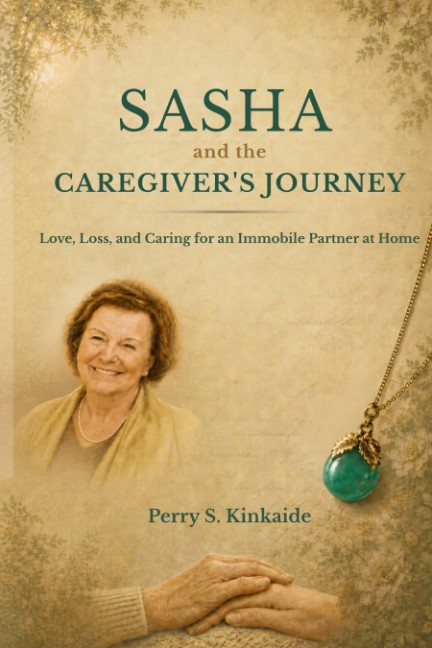
The human dimension. In Sasha and the Caregiver’s Journey, I wrote about caring for my wife as her independence declined. Equipment, instruction and professional guidance mattered. So did patience, time together and the relationship that gave those efforts meaning. The experience taught me that care is not simply something we provide. It is also something we give of ourselves. The power of presence rarely appears in healthcare accounts.
Over four weeks, KEI Network Perspectives will explore the economics of ageing, the science of biological repair, the management of healthcare and the resilience of families and communities. Running through these discussions is a question we may have allowed to recede: what would it mean to restore care to healthcare? The ageing reckoning arrives as the baby boom generation moves through the later decades of life. It asks whether our institutions can adapt, our finances can endure and our communities and families can sustain the relationships that make dependency bearable and later life meaningful.
The ageing reckoning is about more than whether we can afford to grow old. It is about whether we can afford to continue confusing the cost of healthcare with the value of caring.
NEXT · The Biology of Ageing—Can Medicine Outrun the Clock?