


Newsletter Subscribe
Enter your email address below and subscribe to our newsletter


Death As Many Colours - A Pause in the Serialization of The Last Commons: Reclaiming Personal Sovereignty From time to time a serialization must pause — not because the narrative has ended, but becaus
From time to time a serialization must pause — not because the narrative has ended, but because life itself has inserted a paragraph that cannot be ignored. I’m sharing that my spouse of fifty-three years has died. I’m also sharing some of my feelings.
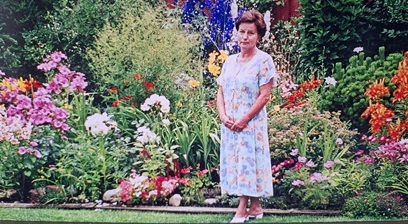
To state the fact is simple. To experience the event is not. Not for me or for others who knew her. We are conditioned to think of death as black — a closing of the aperture, an extinguishing of colour. Yet lived experience resists such economy.
What I encountered was not a single emotion but a plurality; not devastation, but composition. A collage. There was memory, vivid and companionable. There was the curious realization that while the body had ceased, the relationship had not been erased. The form had changed, but the presence had not vanished. Memory persists as an active architecture. There was also the dimension of time: the immediate observation of self in real-time. How do I feel? How should I feel? Do these align? The mind, ever the cartographer, attempted to map terrain for which no single legend exists.
There was the public and the personal, overlapping but not identical. There were ceremonial moments with others and the private silences alone. There was cognition standing beside emotion, neither subordinate to the other. There was loss, of course — but also gratitude, continuity, even a quiet curiosity about the elasticity of life, of mind, of body, of self.
It is tempting to think of death as categorically different from other events. Yet it shares a property common to all transformations: it is multidimensional. Towns die. Products die.
Institutions die. Roles die. Each leaves residue — influence without form. Perhaps death is not the absence of colour but the sudden awareness of many colours at once. Some muted, some luminous, some not yet nameable.
In a work concerned with sovereignty, it seems appropriate to observe that meaning itself
remains one of the last commons. Interpretation is not entirely ceded to custom or doctrine. There is choice. We participate in its formation.
In that sense, the afterlife is not only a metaphysical proposition. It is also a human practice — carried forward in memory, in language, in culture, the subtle continuities of influence. Having been raised by the sea, I can’t but help consider life as a journey and waves as memories, coming and going, rhythmically surfacing, giving continuity to what we experience and remember.
The serialization will now resume and my memory of Alexandra – ‘Sasha’ to some, lives on.
Alexandra — “Sasha” to those privileged by familiarity — passed away at home with me this past Tuesday, one day before April 1st. Her two-and-a-half year journey was peaceful, painless, and anticipated; a passage approached with clarity rather than fear.
Sasha’s life traced a remarkable arc across continents and political systems. Having escaped Communism in Czechoslovakia in 1965, she pursued her undergraduate education at UCLA and later earned her PhD in Clinical Psychology from the University of Alberta in 1979. Her thesis explored the development of the concept of time in children. Her professional life became an enduring act of care.
Through her work with children and families, she cultivated resilience in others with the same patience she brought to gardens — attentive, steady, hopeful. Her practice, Kinkaide Psychological Services, became widely respected throughout western Canada, and her subsequent 23 years as Registrar for the Alberta College of Psychologists helped shape the ethical foundations of her profession for a generation.
We married in 1972 and raised two sons whose lives reflect her steady influence. Paul, with his wife Christie, founded and operated Success 2000, a local tutoring agency devoted to unlocking human potential. Peter leads Raintree Financial, a Canada-wide wealth management firm. He and his wife Kristin, gifted us two grandchildren, Cohen and Sofia — living continuities of Sasha’s curiosity and warmth.
Sasha brought a disciplined grace to every arena she entered. She loved poetry—from Emily Dickinson to Robert Browning—and her musical tastes ranged just as widely, from Pyotr Ilyich Tchaikovsky to Leonard Cohen, from Luciano Pavarotti to Julio Iglesias, and from Waylon Jennings to Nana Mouskouri.
Her reading spanned equally rich territory, from John le Carré to Margaret Drabble, with a particular affection for Canadian writers and the enduring allure of Everest’s quests. On our first date, she introduced me to The Little Prince by Antoine de Saint-Exupéry.
And lest it be forgotten—she could more than hold her own in any political argument.
She was a local tennis champion, an avid gardener, and a devoted practitioner of Czech cuisine. Her kitchen was a theatre of heritage: roast duck, dumplings, caraway sauerkraut, and red cabbage. My contribution was in baking the bread and the apple strudel — humble offerings beside her culinary mastery.
Retirement returned us to one another after two demanding careers. We baked and gardened, too long walks and short trips, grandparented and rediscovered the quiet companionship that had been present all along, living patiently, waiting for time to widen. Her life reminds us that departure is not erasure. Rather, it refracts presence into memory, influence, and a continuation. In this sense, death does not end colour — it reveals the many shades that were always there. – Perry Kinkaide, Editor