

Newsletter Subscribe
Enter your email address below and subscribe to our newsletter


By a variety of measures, oil and natural gas resources have produced high levels of wealth generation. Growth in gross domestic product, average weekly earnings, low taxes, and retail sales, point to
ABCtech #75 31OCT16 Another Call For Diversification
“Imagine Your Business On-line” – Workshop FRIDAY, November 25th, Sheraton Hotel – FOR MORE
“Creating the New Alberta – Vision & leadership” – Convention, SATURDAY, November 26th, Red Deer College – FOR MORE
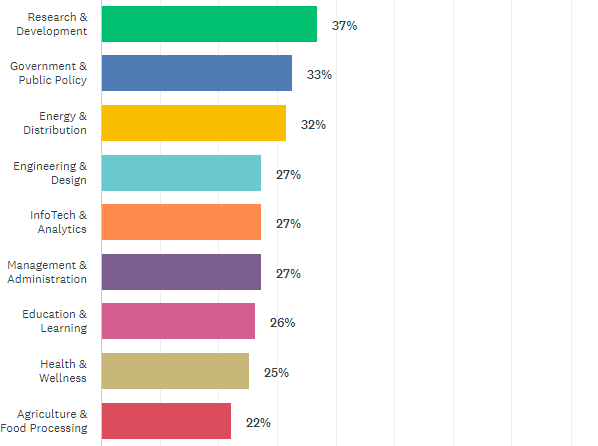
“Is Alberta’s economy resilient and it’s innovation ecosystem effective?” Fall Survey Results – HERE
Another call for Diversification- Many questions, few answers by Robert Ascah, University of Alberta: School of Business
Alberta has been one of the most prosperous economies in the western world over the past 50 years. By a variety of measures, oil and natural gas resources have produced high levels of wealth generation. Growth in gross domestic product, average weekly earnings, low taxes, and retail sales, point to high disposable income and consumption. It appears every time Alberta endures a severe and persistent decline in oil and gas prices, we hear the call for government “to diversify the economy.” As if some sage technocrat working for the Alberta government might be able to painlessly transform the economy.
The Great Depression should have taught us that independent commodity production without value added is inherently unstable. I say “independent” because commodity production, led by a cartel, may be stable for longer periods of time. While Alberta basked in the sunshine of the OPEC cartel for about a decade, history teaches us cartels do not last forever when economic, financial or political agendas diverge. After the bust of the 1980s, it was not until the late 1990s that the emergence of China and its apparently insatiable demand for resources, including oil, lifted oil prices.
As both the public and private sectors crawled out into a new dawn of oilsands expansion (courtesy of Anne McLellan, Ralph Klein and Eric Newell), the seeds were being sown for the next bust. Not only did oilsands production increase but also land development, commercial, and industrial construction boomed. At the same time, the provincial government attempted to remedy the “infrastructure deficit.” It was so easy to make money then. It seemed that Alberta was truly blessed: population increased, schools and hospitals needed to be expanded, and universities too. And gosh, we had a sustainability fund and no debt. Alberta was the envy of Canada- indeed the world. With a Triple A credit and the lowest taxes in Canada, the world was our oyster. SEE ALSO
But was it? During the 2000-2014 expansion, it became increasingly clear that capital investment was the sole driver of Alberta’s prosperity. Builders rushed to build new sub-divisions, desperate for any tradesperson; oilsands investments were completed at multiples of initial costing; lower taxes; and an ever-expanding budget kept money flowing through the economy like water. Of course we knew it wouldn’t last- but we wanted it to continue until we paid off our mortgage or our kids had graduated university. Real estate values continued to expand enabling more leveraged borrowing. Albertans became Canada’s most highly indebted. Why not? Surely things would continue upwards? SEE ALSO
Now we see marks of desperation everywhere as more Albertans utilize foodbanks and homeless shelters and severance and EI payments run out. Politicians now chant the old refrain- diversification. But how? In the past, sectors like financial services, health care, information and communications technology, or biotechnology were to become Alberta’s saviours. Alberta’s fine universities were to become hotbeds of innovation and commercialization. If we look back at the 1980s, government policy was helpful in creating a pulp and paper industry. Whether subsidies were required is another matter. But what about furniture making or thousands of products which can be created from wood? And then we had Klein’s proposal to increase value- added in agriculture. Twenty billion dollars in value added by 2010. It made sense as Alberta had so much land, so much promise BUT where was the execution. Is it the fault of bureaucrats? Farmers? Entrepreneurs? Imagination? Politicians? The Status quo?
Now, by some measures, Alberta’s economy has slowly diversified. In 2010, I organized a conference called Boom and Bust-Again? Challenges faced by a Commodity -based Economy. Several papers in a volume edited by David Ryan spoke to improvements in diversification using measures such as employment or share of GDP. There was some empirical evidence that Alberta’s economy was becoming more resilient. SEE ALSO
As we know, capital flows to sectors that offer the highest risk-adjusted returns. Domestic and international institutional investors are highly sought after by corporations and governments since they command large pools of liquid capital ready to deploy in large amounts. These investors look at both long-term and short-term returns and seek to parlay their investment knowledge to the benefit of their shareholders or beneficiaries. Small investments for furniture artisanship or furniture making, for example, are immaterial to their performance and therefore not funded. And often governments do seek the elephant investments- magnesium plants, upgraders, or new forestry projects, which promise immediate construction jobs and a modicum of high-paid sustaining jobs. REFERENCE
As far as “high tech” is concerned, it’s a long-term, a very long-term, project. Governments have supported capital projects such as the UofA’s Nanotechnology Centre (now the National Institute of Nanotechnology), which has had, thus far, an uncertain track record. SEE ALSO
Venture capitalists are accepting of failure, but politicians, university administrators, and their officials are not. What is the proper “petri dish” to foster innovation? Are we deluding ourselves to think that Edmonton or Calgary will be able to attract the type of intellectual, financial, and creative talent to create “world class” organizations?
I have absolutely no answers to this conundrum. Well maybe three. First, history teaches us that reliance on extracting one (or two) internationally traded, and largely undifferentiated, commodities is not a viable economic strategy for the long-term. As a consequence, government policy should be always tilting away from the dominant industry. Investment managers call this portfolio re-balancing or hedging your bets. Second, don’t bet the farm on big “greenfield” projects. Think small and prove your product or service. This may be the recipe and be patient. Third, there is enormous capital (private and public) that sits idle for a long time. The sharing economy is taking off as under-utilized cars (Uber) or homes (Airbnb) are being put to use. Alberta governments and businesses sitting with so much under-utilized physical capital need to devise innovate ways to rent out this capital. REFERENCE
But it won’t be easy, especially for a government that most businesses distrust.
Bob Ascah is the Principal for Alberta Recession Watch