

Newsletter Subscribe
Enter your email address below and subscribe to our newsletter


In response to the survey we have arranged site consultations across the province - April through September. by Andrew Reif, President Alopex Management Consulting Inc. Small firms grow by pursing thr
ABCtech #18 28APR14 Why small businesses fail to grow
QuikTech Notes
28-APR-14
SAVE THE DATE
MOONLIGHT IN THE MEADOWS
JUNE 12TH
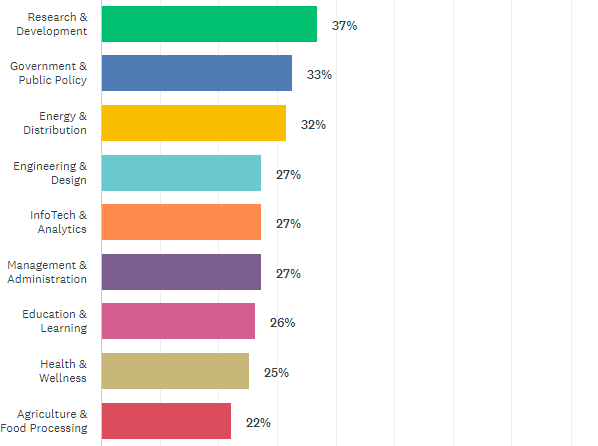
Our survey of small technology businesses revealed much about what they view as important and what is impeding their growth. In response to the survey we have arranged site consultations across the province – April through September. See the April/May schedule below and VISIT www.ABCtech.ca/events to register
Why do small technology firms in Alberta fail to grow? by Andrew Reif, President Alopex Management Consulting Inc.
Small firms grow by pursing three sales strategies: acquiring new customers, selling more to existing customers, and sustaining higher prices from higher value offerings. Higher value offerings are achieved by leveraging innovation. Small technology firms enable innovation through science & technology ideas that deliver a compelling value proposition to unmet customer needs by discovering the right product/market fit and scalable business model. To survive, thrive, and grow small technology firms often adopt a product/market strategy establishing a stable local anchor market to finance national and global market expansion with the US as the preferred first step. Unfortunately the local Alberta market is not favourable to anchor technology firms, support them to scale, and position them for global growth.
Although Alberta has grown rapidly in recent years it remains small in global terms, young and internally focussed, relatively undiversified, and distant from major economic centers that together tightly constrain small technology firm’s ability to build an anchor through new customer acquisition and selling more to existing customers. Firms must over rely on growth through innovation. The source of most technology ideas in Alberta is the strong post-secondary research institutions positioned like those in the rest of Canada in a research ‘supply-push’ model rather than a ‘market pull’ model. The ‘supply-push’ model requires industry receptors to develop and market research results. Local Alberta industry though does not support the acquisition of technology sufficient for small technology firms to survive, thrive, and grow nor as is often the case the ideas offered by Alberta’s research institutions do not align well with local industry needs. Alberta’s energy industry has supported the rapid growth of local service industries such as financial services, hospitality, retail; and, resource riders such as construction, transport, and real estate but these sectors all have a low appetite for technology solutions and R&D investment.[1] Alberta’s energy industry has supported the growth of a metal manufacturing industry but firms innovate through imitation or adoption procuring existing ‘off-the-shelf’ solutions rather than invest in R&D to address their high cost structure. Post-secondary graduates with entrepreneurial ambitions are certainly assisted by local incubators, industry associations, research agencies, angel/VC networks and management consulting as pointed out recently be the Alberta Council of Technologies [2] but entrepreneurs are forced to forego the local anchor market and try to access distant markets capital poor. Many technological ideas are very capital intensive to develop so without an aligned and nurturing ecosystem, industry assistance or the lack of patient money local start-ups don’t survive the ‘valley of death’ or become the ‘walking dead’ leading to a lower survival rate.
Recognizing the failings of the ‘supply-push’ model Alberta’s small technology firms need to solve industry’s unmet needs and problems as well as integrate into global industrial supply chains to grow. In a recent study by The Council of Canadian Academies looking at why Canada’s research strength was not leading to better innovation results The Council identified: Canada’s role in an integrated North American economy where innovation was readily available from US sources; the small size of the domestic market with low level of international competition; and the commercial success of Canadian businesses in the upstream supplier niche with little or no motivation to be more innovative have resulted in Canadian industries “settling into a low-innovation equilibrium” with low industrial receptor demand.[3] Alberta’s industries are heavily based in the upstream supplier niche that has a big environmental problem but a recent example supporting the Council’s view was demonstrated in the CCEMC Grand Challenge for innovative carbon uses where $12M project awards were made to 16 US, 3 UK, 3 Quebec, 1 BC, and only 3 Alberta entrants of which 2 were small technology firms missing an opportunity to make an impact on a home grown tech sector through strategic procurement.[4] Furthermore, commercialization from Alberta’s research institutions into the upstream supplier niche at the lower tiers of the global supply chain is not effective because of the slow diffusion of innovation leading to a long delay before significant demand materializes.[5] The Council identified aerospace, pharmaceuticals, and information technology as the main industries in Canada with strong industry research receptor demand.[3] Unfortunately Alberta has lost ground in aerospace and pharmaceuticals and is not well situated geographically to capture much of this value chain demand and is competing with strong provincial support for the tech sector in Ontario, Quebec, and BC who intend on keeping the business within their jurisdictions. The net result is a technology innovation ecosystem not able to move beyond survival to grow Alberta’s tech sector.
Small technology firms in Alberta won’t grow until the local Alberta market becomes more favourable to anchor technology firms, support them to scale, and position them for global growth. Only a disruptive change brought about by global economic forces, political power shift, or an elevated will to diversify can overcome the current lack of urgency to grow the tech sector in Alberta. The challenge then for decision makers is to find ways to support the home grown tech sector using procurement more strategically and deliver competitive incentives to provide a more favourable anchor market. Rather than seeing the tech sector in competition for talent and resources with the energy sector a key question Albertan’s need to ask is why can’t Alberta be more like Texas with its’ vibrant tech sector thriving alongside a strong energy industry?
[1] Reverse The Curse: Maximizing the Potential of Resource Rich Countries, McKinsey Global Institute, Dec 2013.
[2] Survey Points Finger at Banks and Financial Institutions for Lack of Growth in Alberta Tech Sector, Troy Media, 11 March, 2014.
[3] Paradox Lost: Explaining Canada’s Research Strength and Innovation Weakness, Council of Canadian Academies, 2013.
[4] CCEMC Names Winners for Round One of $35 Million International Carbon Use Competition, 15 April, 2014, accessed at http://ccemc.ca/media_release/1553/ 22 April, 2014.
[5] Innovation Diffusion from University R&D, blog post by Andrew Reif, 10 Sept, 2013 accessed at http://alopexoninnovation.com/2013/09/10/innovation-diffusion-from-university-rd/, 23 April 2014.
POSTPONED until the Fall of 2014
International Perspectives on the Development of Entrepreneurship: From Education to Ecosystem
May 1 & 2 – U Alberta Alberta, North Campus
Alberta School of Business Building
Explore entrepreneurship in Edmonton and internationally. Learn best practices for fostering entrepreneurship from leaders in higher education, government, and the corporate sector.
Register online HERE
What Is Your Current and Future Organizational IQ?
Are you working on what matters most? Are you future ready?
Organizational Excellence Specialists and Future IQ Partners are hosting an opportunity for leaders to assess the current state of their business and prepare to face the future with confidence.
Derrick Golf & Winter Club, 3500-119 Street, Edmonton, Alberta
May 16, 2014
8:00 am to 1:00 pm
April – May SME Site Consultation Schedule
“What do small technology businesses need to grow?” These 1.5-hr. workshops will hi-lite the findings of the panAlberta survey RESULTS HERE digging deeper to learn what you think! Site consultations are being scheduled for Alberta communities – April through September. A final industry report with recommendations is to be released in the fall.
Contact info@ABCtech.ca for additional information.
Helping small technology businesses grow. The September/October schedule will be released shortly for: Grande Prairie and Fort McMurray (2 workshops – September 25th), St. Paul and St. Albert (September 23rd), Red Deer, and Calgary (2).
If your community is not listed and interested, please contact pkinkaide@ABCtech.ca
Register $25 at
www.ABCtech.ca/events

LOCATION
Local co-Hosts
Date
Time
Location Address
Drayton Valley
Town of Drayton Valley & Sustainability Resources Ltd.
Apr 25th
4:30-6:00pm
COMPLETED
Edmonton
U Alberta: Business Family Institute & Agriculture & Food Council of Alberta
May 6th
7:30-9:00am
Enterprise Square, Hudson’s Bay Building, Jasper Avenue
Medicine Hat
Medicine Hat College & Southeast Alberta Regional Innovation Network
May 7th
4:30-6:00pm
The Courtyard Room, Medicine Hat College, 299 College Dr. SE
Lethbridge
University of Lethbridge & Lethbridge Chamber of Commerce
May 8th
8:00-9:30am
Tecconnect building located at 3582 – 30th Street North