

Newsletter Subscribe
Enter your email address below and subscribe to our newsletter


Innovate to let small technology businesses grow by Jac van Beek, CEO, CMC-Canada Visit CMC: Alberta for more about Jac van Beek's visit to Edmonton - April 15th. Maybe it’s time to let those who can
ABCtech #16 06APR14 Innovate to let small businesses grow
QuikTech Notes
06-APR-14
SAVE THE DATE
MOONLIGHT IN THE MEADOWS
JUNE 12TH
RESERVE YOUR FIRM’S HOSPITALITY SUITE NOW
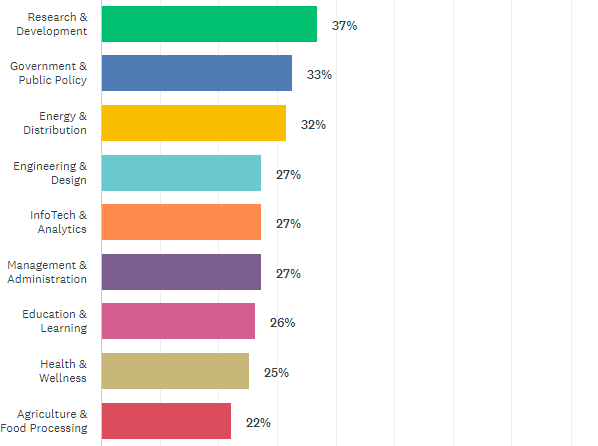
Our survey of small technology businesses revealed much about what they view as important and what is impeding their growth. In response to the survey we have launched a series of SME site consultations across the province – April through September – VISIT www.ABCtech.ca/events In addition, we are inviting editorials on subjects rated most popular in our survey of subscribers appearing at the end of this Note. – Editor
Editorial. Innovate to let small technology businesses grow by Jac van Beek, CEO, CMC-Canada Visit CMC: Alberta for more about Jac van Beek’s visit to Edmonton – April 15th.
Maybe it’s time to let those who can help…..help. A major conclusion of the recent survey by the Alberta Council of Technologies is that governments, financial institutions and multi-nationals are not effective mechanisms to grow small technology businesses. Rather, associations, incubators, research agencies, angel and venture capital networks and management consulting are cited as the most effective way to access needed marketing, manpower, management, networking and internal investment.
A look at the nature of business formation would provide ample rationale for such a conclusion. There are three broad types of new businesses: promising start-ups, VC-backed ventures, and corporate ventures. Each has a recognizable risk profile and operate with different drivers and constraints:
Turning a promising technology start-up into a large, long-lived corporation entails a radical transformation from high unpredictability and variable profitability to stable profits derived from many tangible and intangible assets, supported by deeply embedded capacity for coordination and integration.
The transformation from fledgling to maturity requires protracted, purposive investment. Firms acquire a system of coordinated assets gradually, because capital constraints limit the size of individual investments and because it takes time to build customer relationships, know-how and other intangible assets. Building long-lived firms involves the coordination of investments and efforts across functions and time.
Where should such support come from? Most logically from experts and investors with an interest in building long term enabling relationships with intermittent, strategic interventions.
Many traditional business support mechanisms have limited capacity to offer effective support to emerging technology businesses:
Enabling policies and funding support for formative or emerging technology businesses should flow to micro level business oriented organizations such as member-driven associations, programs such as NRC-Industrial Research Assistance Program (IRAP), and research enterprises with robust commercialization and applied research programs (Alberta Innovates – Technology Futures), including universities and colleges. These organizations often work collaboratively to serve emerging business. For example, NRC-IRAP’s management advisory service (MAS) allows program officers to access accredited management consultants for the benefit of their clients because of a formal partnership with CMC-Canada, thus advising on technical and management issues – see http://www.nrc-cnrc.gc.ca/eng/irap/about/partnerships.html
The more that enabling or support organizations innovate to address business gaps collaboratively, the stronger our capacity to nurture promising emerging technology businesses.
The Global Entrepreneurship Monitor (GEM) and associated webinar – April 9th
GEM Canada Report
The Global Entrepreneurship Monitor (GEM) is the largest and oldest study of entrepreneurship in the world. In 2013 it covered 70 countries. Canada has been absent since 2003 but is now back in. The unique aspect of GEM is that it focuses on the individual entrepreneur. Canada fares very well in this report. Some highlights:
If you would like to learn more, you are invited to participate in the webinar that will launch the Global Entrepreneurship Monitor report on Entrepreneurship in Canada. Please “hold the date”<spanarial”,”sans-serif””> April 9, 2014. We will send detailed information how to connect closer to the date. You do not need to RSVP to join the webinar, but any comments or expressions of interest would be welcomed. Feel free to share with you colleagues.
Where & When:
Time: 11:00 am MT/1:00 ET
Date: Wednesday April 9th 2014
Place: Webinar. Log in information will be sent closer to the date.
For those unable to join the webinar, we will post the complete 2013 GEM Canada report and the related PowerPoint presentation, on the following web sites:
THECIS and GEM Canada at 11:00 am MT on April 9th.
In addition to the Canada report, there will be detailed provincial GEM reports available for BC, Alberta, Saskatchewan, Manitoba, Ontario, Quebec and Newfoundland. These will become available in the coming months.
Thank you
Peter Josty, PhD, MBA
Leader, GEM Canada Team & Executive Director,The Centre for Innovation Studies (THECIS)
Editorial topics rated by subscribers as most interesting
GROUP A. In order of interest
#4. Creative financing of SMEs – Emerging options for accessing capital
#5. Reality check – What to expect of each level of government and banks
#8. Networking for growth – How, why and where!
#2. Stemming Alberta’s entrepreneurial brain drain
#1. SMEs – Key to economic diversification
#9. First connectivity then capacity – Small business essentials for saving rural Alberta
#3 Talk less – think more. Listen to your customer!
#7. Working with multi-nationals – Or NOT?
#6. Stirring creativity – Strengthen the voice of independent NGOs
GROUP B. In order of interest
#11. Selling more – Small business branding,communications and marketing
#13. Regional buying and selling groups – Benefits for small business
#17. Know your competition – Mergers and acquisitions for growth
#15. Get it for free – Engaging volunteers in growing small business
#12. Seconding consultants for managing growth – Pay for performance
#10. Scorecards for rating incubators and start-up centres
#18. Automating the knowledge channel – When machines aide and decide
#14. Public procurement – Feast or famine?
#16. The great divide – Inter-generational distrust and opportunities
Whasup with ABCtech – “Growing the future every day” – 2014
Get engaged, make a difference. We are seeking: complimentary editorials, co-hosts for site consultations, sponsored seminar topics, volunteers for a range of industry advisories, ideas and recommendations on benefits for new Members.
CONTACT info@ABCtech.ca