

Newsletter Subscribe
Enter your email address below and subscribe to our newsletter


In 2014, a growing number of businesses accrued tangible results from their analytics initiatives: Incremental revenue gains through proactive pricing. Better customer engagement across channels. Sign
ABCtech #34 05FEB15 Analytics & The Cloud – Automating Management – Cloud computing and the frictionless future AND Eight Significant Analytics Trends
Eight Significant Analytics Trends
The choppy waters of data management’s past have given way to measured waves of analytics innovation. In 2014, a growing number of businesses accrued tangible results from their analytics initiatives: Incremental revenue gains through proactive pricing. Better customer engagement across channels. More resilient supply chains. Significant reductions in fraud, waste, and abuse.
The list goes on – and it’s likely to grow as long as businesses keep an eye on analytics advancements and take a strategic approach to adopting and applying leading analytics capabilities. The trend toward using data to make smarter decisions shows no sign of slowing. In fact analytics-driven decision making is becoming the standard for today’s competitive businesses.
Deloitte has assembled a list of 8 significant analytics trends to watch in 2015 that we think continue this momentum. Our trends offer some food for thought on how, where, and why the role of analytics is changing, and how businesses might respond. Many enterprises may be asking (and answering) some interesting questions around these trends:
Monetize This: Have we considered all the value our data can provide – and how do we determine the value of information value anyway?
Bionic Brains: What are the possible implications of machine learning and artificial intelligence – not just for our business, but for society and daily living?
Tax Analytics: What critical insights can tax executives gather from the quantitative field of tax analytics?
Universities Step Up: How can future analytics professionals “skill up” to deliver on advances in data science and analytics?
And more…
And what about the continuing importance of data security? This “supertrend” affects nearly every inch of the enterprise – and it can play an important role within the other trends identified. From intrusion detection to malware countermeasures, analytics-driven security strategies can offer organizations a predictive, proactive approach to their security challenges.
Some other areas to keep an eye on in the coming months include facial recognition and geospatial monitoring, the public call for data accountability, and analytics’ innovations that affect our daily lives – like smart cars and wearables. FOR MORE
Ten IT-enabled business trends for the decade ahead – McKinsey Quarterly (May 2013)
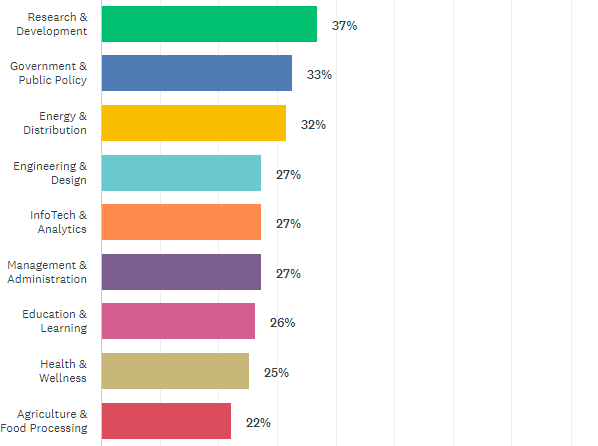
Two years ago McKinsey got it right. As technological change accelerates and adoption rates soar, ten pivotal trends identified in information management included:
– by Jacques Bughin, Michael Chui, and James Manyika FOR ARTICLE For a more current assessment VISIT HERE
The Conference Board of Canada
Business Innovation Summit 2014
April 28/29th, Toronto
Special Rate for ABCtech Members $495
Automating Management – Cloud computing and the frictionless future
There are several phrases that most of us will hear throughout our business careers: “Work smarter, not harder.” “Stay close to your customers.” “Budgets are tight.”
One that most of us have heard is “Focus on our core competencies,” or “Those who have too many priorities have none.” But executives who doggedly pursue excellence in a handful of areas are about to become dinosaurs, eclipsed by managers who are in tune with the efficiency gains, the expanded reach and the vastly improved business insight that a cloud business infrastructure delivers.
The Cloud is generally considered to be an IT issue, but today IT has morphed into an executive challenge. We hear ofIaaS/ PaaS/ SaaS and public/ private/ hybrid, but these are tactical, temporary debates. The more important discussions are about how corporate managers can use cloud to reshape their businesses; how executives can use the Cloud for addressing broader corporate objectives.
Cloud is an ideal platform for business automation. Cloud-based applications cost much less than on-premise software, and because Cloud is delivered as a service, it is not constrained by available IT bandwidth. Insight aS research has identified more than 40 areas where cloud-based automation can be usefully applied to business operations. Cloud is superior for automating business tasks, processes, departments and enterprises, presenting a unique opportunity – and a unique challenge – to executives. Winning strategies capitalize on connected and fully integrated systems. Firms constrained by a limited number of priorities will be unable to keep up with others that pursue “omni-competence” via the cloud.
So what are the ‘next steps’ to capitalizing on cloud’s potential? To move the cloud dialogue beyond IT and into a management-level discussion, businesses need a model for cloud adoption – a process for introducing, expanding and connecting cloud-based business capabilities throughout the enterprise. This process starts with a flexible road map that can address emerging opportunities -everything from cloud-based storage to Big Data and the Internet of Things (IoT). The road map serves as a guide for addressing the practical considerations to be addressed throughout the journey. For example, what is the best way to scope requirements for cloud-based infrastructure, and what is the best approach for orchestrating across multiple cloud applications?
Ultimately, the successful strategy – in cloud or any other aspect of business – requires executives to connect planning imperatives with a framework for execution. From a cloud perspective, this entails linking an understanding of why core competency is an obstacle to success in the zero-friction future to a logical, long-term plan for positioning cloud at the core of business infrastructure. – by Michael O’Neil, Principal Analyst, InsightaaS FOR MORE AND MORE
SAVE-the-DATE – MARCH 24th
Chateau Louis – Edmonton, Alberta
CONFERENCE
Creativity & Convergence – Engineering innovation, blending arts & and technology
AM Workshops – Luncheon – PM Chat Rooms
“U-Who” Reception
Registration opens February 10th
Presenters & Sponsors
Contact info@ABCtech.ca or (780)990-5874