

Newsletter Subscribe
Enter your email address below and subscribe to our newsletter


ABCtech #150 01SUG07 Report - Access to Capital “Diversifying Alberta’s economy through technology” ACCESS TO CAPITAL A Challenge for Alberta Business Prepared by: Prepared for: Working Group on Acces
ABCtech #150 01SUG07 Report – Access to Capital
“Diversifying Alberta’s economy through technology”
ACCESS TO CAPITAL
A Challenge for Alberta Business
Prepared by: Prepared for:
Working Group on Access to Capital 1st President’s Council on Access to Capital
Commissioned by:
Alberta Council of Technologies August 2007
INTRODUCTION ………………………………………………………………………… 3
ISSUE RELEVANCE ………………………………….………………………………… 4
THE CHALLENGE …….………………………………………………………………… 5
STAGES OF INVESTMENT ………………………………………….………………… 6
VENTURE FINANCING FACTS – ALBERTA AND CANADA …..………………….. 7
Global venture capital trends …….…………………………………………………. 7
About – Angel investors and investing …….……………..……………………….. 8
Canadian venture financing ……………………….………………………………… 9
Alberta venture financing ……….. …………………….……………………………. 10
OPTIONS FOR CHANGE – INCREASING ACCESS TO CAPITAL ……….………. 11
3. Improving Tax Treatment for Investors…………………………………………… 12
4. Mandate the Heritage Fund Portfolio to Invest in Early-stage Start Ups……… 14
5. Revising SR&ED Tax Credit Regime…………………………………………….. 15
6. Engaging Municipal Government…………………………………………………. 16
7. Leverage Government Procurement……………………………………………… 17
8. Recruiting Highly Qualified People in Companies………………………………. 18
9. Promote Micro Financing…………………………………………………………… 19
10. Bank and Credit Union Training and Orientation……………………………….. 20
11. Syndicated Angel Funds…………………………………………………………… 21
12. Entrepreneur and Investor Education……………………………………………. 21
13. Bridging the Pre-Commercial Gap – the Seraphim Fund………………………. 22
14. Recruiting High Tech Angels………………………………………………………. 23
RECOMMENDATIONS – IMPROVING ACCESS TO CAPITAL
Recommending four Key Strategies
Angel Capital………………………………………………………………………… 24
Recommendations for Industry and Venture Financing Community……………….. 25
Recommendations for Governments of Alberta and Canada……………………….. 26
CONCLUSION – PREPARING FOR THE FUTURE ………………………………… 28
APPENDIX
MEMBER SURVEY ……………………………………………………………………… 29
The Alberta Council of Technologies www.ABCtech.ca believes that enterprise is at the heart of diversification and that early-stage enterprises deserve more credit and support for dispersing technology into the economy. Of the various keys to survival for technology-based, knowledge-intensive small and medium-sized enterprises (SME’s), Access to Capital is issue #1 of the Council
Again and again we learn of technology-based, new enterprises floundering and failing because of the lack of early-stage financing. These enterprises often expire in the so-called “Valley of Death,” isolated and impoverished, branded “high risk” by investors. This need not be – “baby-boomers” are preparing to transfer billions of dollars of accumulated wealth, and in retirement they constitute a unique source of business, science and technical expertise. And while Alberta’s economy is robust, it is forever searching for new technologies for enhancing productivity and adding value to Alberta’s carbon-based products.
To help, the Alberta Council of Technologies commissioned a working group in January 2007 to prepare a report for the 1st President’s Council on Access to Capital. This Council of public and private appointees would be formed and financed to prompt action for resolving the issues identified in the Report. The mandate of the Access to Capital working group was to:
The Working Group was comprised of: Craig King, Perry Kinkaide, Erv Krawchuk, Darryl Lesiuk, Michael Lounsbury, Rus Matichuk, Stephen Murgatroyd (facilitator), Spencer Ord, Jacqueline Pambrun-Hunt, Danielle Smith David Tam, Brenda Thibault, Jim Thomson, Hugh Wyatt, and Gary Zatko. Mike Hollinshead provided invaluable assistance and contributed significantly to the report. We also received valuable advice and support from Warren Bergen and Jeremy Heigh (AVAC) and members of the Innovation Expedition including Darin P Graham, Bob Taylor, Bob Mitchell, and Don Simpson.
Our report is not definitive, nor is it the “last word.” We have aimed to expose the unique features and challenges, options and recommendations for reducing the failure rate of the new pioneers of the Alberta economy.
The Working Group
August 2007
Why is Access to Capital for technology-based, knowledge-intensive, SMEs important for Albertans?
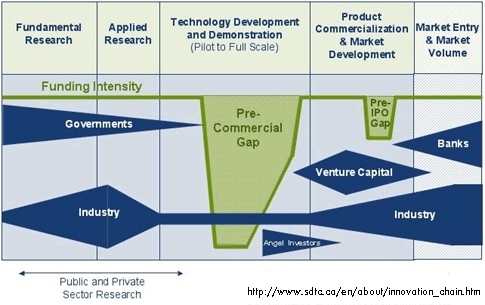 A significant problem is the pre-commercialization of gap (see Figure 1 below) – often referred to as the “Valley of Death” for entrepreneurs. The estimated size of the gap between possible investment and actual investments is estimated to be $5 billion annually in Canada. This gap is between the upper limit of angel financing (~$500,000) and the lower limit for venture financing (~ $5 million). Resolution of the “Valley of Death” problem must focus on establishing the receptive capacity for technology-based enterprises, including the formation of angel networks for attracting and developing angels and their understanding of the market, and improving the investor readiness of firms thus helping the venture capital market bridge the gap.
Figure 1. Stages of investment in firms illustrating the Pre-commercial “Valley of Death”
Early-stage capital is of little value without the requisite investment knowledge. One key to the success of Silicon Valley is that angels and early-stage capital fund managers were active in networking and connecting the companies they invested in with others. Mentors, coaches and guides for entrepreneurs used their connections to fast track links to suppliers, distributors and markets. Thus, investment is more than just cash – it is also about experience: capital without know-how will be misspent. Education of investors and entrepreneurs is therefore a key consideration in any strategic approach to resolve the Access to Capital problem. It becomes especially important when we look at emerging and complex markets for Alberta firms, like biotechnology, nanotechnology, biofuels, medical devices and geomatics. New sources of funds and “well” educated investors and entrepreneurs are essential ingredients for diversifying Alberta’s economy.
Finally, Alberta’s telecommunications and transportation infrastructure play an important role in the success of Alberta information dependent and dispersed firms. A contemporary information and communications infrastructure, efficient and effective transport and distribution for people and business, reliable and secure access to energy supplies and predictable energy costs are critical features in attracting, growing and retaining companies in Alberta. While Edmonton and Calgary may be better served than many rural communities or smaller cities, it is critical to develop rural Alberta if for no reason than to stem the de-population of rural Alberta. Great ideas can come from anyone, anywhere – corporations are encouraging local entrepreneurs to connect with them and propose new products or services. Alberta needs an integrated infrastructure that makes it possible for firms to quickly access knowledge, skills and support they need, when they need it. We have a long way to go.
Several Federal and Provincial programs support growing companies – they range from Federal and Provincial tax supports, systematic program investment systems such as Western Economic Diversification or pre-capitalized infrastructure supports such as the Alberta Research Council. But Alberta needs to unbundle, focus and better coordinate key components required to build successful firms in Alberta – more knowledgeable and skilled high tech angel and venture investors, more syndication of these investors and more investor ready companies able to leverage syndicated funds.
The working group emphasizes that moving from where we are to where we need to be is both urgent – now is the time to leverage Alberta’s prosperity – and difficult: success is a significant impediment to change. Leadership is warranted – our aim was to explore the options and recommend action.
Companies in Alberta struggle to secure financial capital at each stage of their development. Angel funding in Alberta appears “tight” and growth funding difficult to obtain. The difficulties in securing timely, adequate and effective access to capital inhibit company development and growth and can be a factor in a company’s failure. If Alberta is to be successful in developing a more diversified economy, access to capital issues need to be resolved so that firms can prosper and grow.
Further, Alberta’s ability to commercialize technologies, our “receptor capacity” – is impeded by the lack of access to capital. Funds needed to support prototyping, pre-commercial product development and market research, capacity development for full scale commercial operations and the enhancement of market reach are simply unavailable for many firms. In a typical year, Alberta attracts between 2-3% of the available venture capital in Canada, despite having 10% of the population and being the driving economy of the nation. It is estimated that some two hundred huge tech start-ups which are seeking angel and early-stage capital fail to secure investment each year in Alberta.
The early-stage problem is not only the problem of a lack of funds. It is also the lack of knowledge on both sides of the market – on the part of those seeking funds and those providing them. Neither have enough knowledge of the other’s needs, of the market opportunity or of the way in which investors look at management and how management looks at investors. Angel investors, for example, who invest in oil and gas services or real-estate, have a hard time understanding how some high tech markets operate and the time it takes to secure success.
Another aspect of this problem: Canada in general and Alberta in particular have a shortage of Tier One venture fund managers – managing partners with responsibility for the management of significant funds that secure significant returns for investors. This means that many of the funds that emerging firms access are managed outside of Alberta and, in a growing number of cases, outside of Canada.
As noted earlier, different types of investment apply for supporting the unique stages of corporate growth. A description of the investment source(s) for each stage of growth follows[1]:
Seed or Concept stage financing. The venture is still in the idea formation stage and its product or service is not fully developed. The usually lone founder/inventor is given a small amount of capital to come up with a working prototype. Monies may also be spent on marketing research, patent application, incorporation, and legal structuring for investors. It’s rare for a venture capital firm to fund this stage. In most cases, the money must come from the founder’s own pocket, from the “3 Fs” – Family, Friends, and “Fools” – , and occasionally from, third-party angel investors.
Startup financing. The venture at this point has at least one principal working full time. The search is on for the other key management team members and work is being done on testing and finalizing the prototype for production or launch of “version 1.0” of a product or service. Early-stage venture capitalists –who are as rare– may fund this stage. But more likely, it will be sophisticated angel investors.
First-stage financing. The venture has finally launched and achieved initial traction. Sales are trending upwards. .A management team is in place along with employees. The funding from this stage is used to fuel sales, reach the positive revenue point, increase productivity, cut unit costs, as well as build the corporate infrastructure and distribution system. At this point the company is two to three years old.
Second-stage financing. Sales at this point are starting to snowball. The company is also rapidly accumulating accounts receivable and inventory. Capital from this stage is used for funding expansion in all its forms from meeting increasing marketing expenses to entering new markets to financing rapidly increasing accounts receivable. Venture capital firms specializing in later stage funding enter the picture at this point.
Third-stage financing. At this stage the future is so bright the founders “gotta wear shades” to borrow a phrase from the old pop tune. Everything looks good. Sales are climbing. Customers are happy. The second level of managers is in place. Money from this financing is used for increasing the productive capacity of the venture, marketing, working capital, and product improvement or expansion.
Mezzanine or Bridge financing. At this point the company is a proven winner and investment bankers have agreed to take it public within 6 months. Mezzanine or bridge financing is a short term form of financing used to prepare a company for its IPO. This includes cleaning up the balance sheet to remove debt that may have accumulated, buy out early investors and founders deemed not strong enough to run a public company, and pay for various other costs for going public. The funding may come from a venture capital firm or bridge financing specialist. They are usually paid back from the proceeds of the initial public offering (IPO).
Initial Public Offering (IPO). The company finally achieves liquidity by being allowed to have its stock bought and sold by the public. Founders sell off stock and often re-engage another startup.
Different accounts of venture capital use slightly different terms, confusing the field. The terms used in this report are explained next.
So as to understand venture financing in more depth, the following is a summary of the facts as they pertain to Alberta’s capital market in 2007.
Global venture capital trends. Capital flows across the world and displays a variety of different patterns, depending on both the source of funds, the destination in terms of jurisdiction and industry sector in which an investment is to be placed. However, if we look systematically at global venture capital trends we can see some clear patterns.
The following chart illustrates some of these trends:
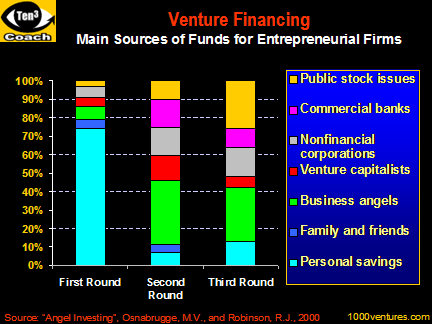
Figure 2: Financing for Firms (Global View)
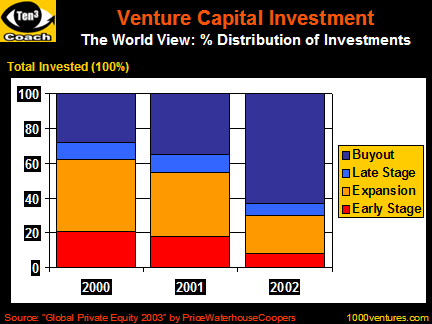
Most second stage financing (early-stage and often pre-profit) comes from angel investors – who also appear to participate at the third round of expansion and growth. Note most venture capital investments are made at late stage or buy-out points in the life cycle of a firm.
 .
.
Figure 3: Stages of Deal Flow
Angel investment is thus often much more critical to early-stage companies than venture capital – it is their financial lifeblood to get them venture capital investor ready. From several systematic studies of angel investment it is clear that, for knowledge intensive industries, angels turn out to be important to the development of companies. Here are some of the facts[2]:
Any strategy that seeks to address issues and challenges for companies with respect to Access to Capital must consider angel financing as the starting point for most firms. Alberta faces different hurtles than the country overall.
Canadian venture financing. Starting late – now addressing management and capital gaps.
Summary. A large number of weak company management teams present poor business propositions which leads to a scatter gun approach by venture capital firms. When management is found, there are too few deals per venture capital firm to invest in, with too little cash in each deal, especially for growing companies. Venture capital firms in Canada “stand too far back” and are not aggressive in moving companies through a rigorous, market driven performance program aimed at growing the company. This results in low pay off from many deals. This in turns does not attract investors.
Alberta venture financing. Too few deals or too little capital?
Summary: Strong management, effective cluster development and appropriate support from Governments have led to a strong oil and gas economy in Alberta which attracts substantial capital. Similar strengths appear to exist in modest amounts in other sectors, thereby affecting available capital. Where capital is invested in effective management in Alberta, venture capital investment appears strong and successful. The problem appears to be that there are few opportunities for such investments.
The working group established by the Alberta Council of Technologies reviewed the available literature, practices in other jurisdictions and examined options for change. A description of these options follows, supported by reference materials as appropriate. The aim of this section is to provide an understanding of the actions taken by others to counter the lack of venture capital from traditional sources. Some of the options are more applicable to Alberta than others, depending on the nature of the economy and their fit with the forces and sources of change.
A key task for the working group was to identify actions that the various “players” in Alberta’s innovation system could take for increasing Access to Capital for firms in knowledge intensive industries. The following is a list of options for increasing the amount, accessibility and success of capital for early-stage and developing firms.
The downside is that flow through shares distort the market and lower the value of companies. Investors invest to secure the tax benefit and can secure a return by selling their shares at less than the market would normally pay – a share sold at $0.75 cents is a profit of 82% to the investor, but lowers the value of the company by 25%.
Federal flow through share arrangements are due to end in March 2008, though the applicable industries are lobbying for an extension.
An option is to apply the flow through to particular knowledge intensive, technology-specific sectors or to associated early-stage companies for the first few years of their operation. While very difficult to administer, it would help “attract” angel investors and reduce their risk. Such arrangements require agreements between the Federal and Provincial government, since they relate to tax matters applicable to both jurisdictions.
The way this works is simple. An angel network (e.g., Keiretsu Forum, Alberta California Venture Channel, Deal Generator, and Venture Alberta) is formally established with a systematic process for qualifying both investors and “seekers”. Once established, the Network is registered with the appropriate Government. For every investment made, the government offers a “match” of some kind. This can vary from $1 of government funds for every $3 of private investment to 1:1 matching. Such matching is established in the United Kingdom, Belgium, France, Austria and some states in the United States.
A key feature of such a proposal is that the final decision as to who gets funds is with the investor, not with the government. The government invests in the network to support innovation – as a public asset – and does not scrutinize the investment decisions, but holds the Network accountable for best practice decision making.
“Syndication” is an important feature of angel networks. A qualified seeker can present their proposition in Edmonton, Calgary, Red Deer or wherever the investor network meets and an investor may make investments in a business presented at another location. Syndication, investor and business education are normally prerequisites for government involvement.
Sidecar funds normally involve: (a) a requirement of investors to engage in educational activities to better inform them of how to make investments, what role they should play once an investment has been made and to help provide a better understanding of emerging markets; (b) that the recipient of sidecar funds be part of a syndicated fund as opposed to a stand-alone fund; and (c) that entrepreneurs receiving sidecar funds also participate in an educational program.
In Alberta, such a fund has significant appeal – increasing the size and number of angel investments, improving the quality of these investments and helping to attract and develop new investors into the angel investment community.
The current situation in Canada is this: Revenue Canada recognizes a tax-free, lifetime capital gain of up to $750,000 when selling shares of a qualifying Canadian owned private business (this increased by $250,000 in March 2007). Additionally, in the situation where there are losses, they are favourably treated as being deductible from total income (not just capital gains) as an allowable business investment loss.
Addition capital gains incentives may encourage growth in angel investment. It is the position of most groups representing investors that the most significant act the Government of Canada could take to encourage more access to capital is to change the capital gains allowance to $1 million or more.
Three additional features of the Federal tax regime also require attention. These are: (a) managing loss provisions; (b) tax treatment of stock options, and (c) capital gains rollover. Let us briefly review some options.
(b) Stock Options. There are two principal issues relating to stock options:
Stock options have been a significant component of high tech employee compensation packages over much of the last 15 years. Stock options provide employer corporations with the ability to offer employees additional compensation without negatively impacting corporate cash flow. The economic upside of options was also very attractive to potential employees when the equity markets were strong and the options served as a powerful recruiting tool for high tech employers.
Federal tax incentives for employee stock options are available as:
Unfortunately, there are two separate ways to get each of these incentives. A deferral is available for most options issued by CCPCs. As a result of changes introduced in the 2000 Federal Budget, employees with certain public company options can also elect a deferral within specified dollar limits. The special 50% deduction can be achieved on certain CCPC options where the shares are held for a further 2 years regardless of how the strike price on the options was set. A separate rule provides the 50% deduction for options regardless of CCPC status so long as the strike price is not less than the fair market value of the shares.
Employees may hold identical shares that have totally different tax attributes as they were acquired under the following circumstances:
As there are these various sources of shares, a host of detailed tax rules relating to the pooling of various sources, ordering of option exercises, ordering of share dispositions, cost base calculations, calculating the gains on quick flips, etc. are provided in the Income Tax Act. Since the introduction of the public company rules and a number of related changes in the 2000 Budget, the rules have become so complicated that an employer has great difficulty giving employees anything other than the most basic tax advice on the consequences of exercising their options and selling the shares.
The complexities relate to the layering on of the public company deferral rules over the general rules and the special CCPC rules. It may be appropriate to consider a re-write of the rules.
Why not have a set of rules for so-called “good” options and one for “not so good options”? In principal, should the employees of both public company and CCPCs be entitled to a deferral of the taxation of their option benefit while non-CCPC private corporation employees are not?
The US has a system that recognizes “good options” and “not so good” options. The “good” options – referred to as Incentive Stock Options or “ISOs” qualify for a deferral and capital gains treatment. The “not so good” options – referred to as Non-qualifying Stock Options,’ have ordinary employment income treatment, do not qualify for a deferral and are taxed at the time of the acquisition of the shares. While there are a number of requirements for an option to be an ISO, many of them deal with the attributes of the plan, but there are also holding period requirements. Conceptually, the key determinant in the classification is whether or not the strike price is equal to or greater than the fair market value of the shares at the time that the option is granted. If the employee is not getting a bargain, the options will be eligible for ISO treatment if the other requirements are met.
A separate but significant and longstanding problem that has caused tremendous hardship for some employees who have exercised stock options also needs to be addressed. It centres on the characterization of the stock option benefit (the difference between the strike price paid for the share and the fair market value of the share at the time of the acquisition of the share) as “employment income” – albeit only 50% subject to tax in most cases, with the subsequent increase or decrease in the value of the share between the time of acquisition to the time of sale as a capital gain or capital loss, as the case may be. If the share price increases during the holding period, the economic gain is taxed as a capital gain and that is satisfactory. If the share price declines during the holding period, however, the individual realizes a capital loss. One-half of the capital loss can be deducted against the taxable half of capital gains realized in the year or carried back to offset capital gains realized in the previous three years. If the employee has no capital gains to offset, the capital loss must be carried forward. The economic loss since exercise becomes a trapped capital loss.
(c) Capital Gains Rollover. The capital gains rollover was introduced in the 2000 Federal Budget when the equity markets were still strong. It allowed individuals to defer recognition of some or all of their capital gains arising on the disposition of an eligible small business investment when the proceeds are reinvested in other eligible small business. The deferral was only available with respect to the first $2 million of the individual’s original investment. There were no limits on the total amount that could be reinvested, but no more than $2 million reinvested in shares of any particular company or related group qualified for the deferral. In addition, a very short timeframe was provided for reinvestment.
The 2003 Federal Budget eliminated the $2 million limit on original and reinvested amounts for purposes of the deferral. The Budget also extend end the period in which a reinvestment qualifying for the deferral may be made.
Such a requirement could be met in others ways – e.g. by preferred procurement (see below), by increasing investment from this source (or general revenues) in commercialization related activities or by requiring a portion of taxation revenues to be dedicated to economic development. The idea here is that we increase the pool of available capital to be invested in Alberta’s SME’s.
The key issue underlying SR&ED tax credits is that the company has to be a CCPC – it cannot be controlled by any combination of public and foreign ownership. This limits who is eligible and disregards the cross-border and global nature of many knowledge intensive firms. This too needs to be reviewed.
For Alberta companies, there is a significant disadvantage. Most Canadian Provinces provide a provincial “match” to the Federal SR&ED fund. Alberta does not. A significant change which would “level the playing field” for Alberta companies would be for Alberta to match the Federal SR&ED tax credits.
Municipal governments working with the State can access State funds to support local enterprise.
Looking specifically at Texas, the State and its municipalities collaborate in economic development in a variety of ways. These include:
Some municipalities in the US have adopted a municipal economic development sales tax. Texas makes this possible – see http://www.cpa.state.tx.us/taxinfo/taxpubs/tx96_302.html as does Nebraska – see http://assist.neded.org/LB840Guide.pdf The underlying idea of such taxes is simple: the voters of a municipality should have the right to spend their own tax dollars in the manner they find best suits their own local needs. Within certain broad limits, local municipalities are given a great deal of latitude in defining local economic development needs and in spending their own tax dollars in meeting those needs. In Nebraska, the process requires process involves the formulation of the local economic development program plan that is perhaps the most important part of the process. The plan forms the foundation for the collection and expenditure of local tax revenues for economic development and, if the voters approve the plan, its provisions become the basis through which the municipality’s economic development program operates. Careful, thoughtful development of the plan is of paramount importance to the success of the economic development program. Understandably, voters are more likely to approve the expenditure of their tax dollars if they believe the plan is well though out and workable. Once voters approve the plan, it defines the limits of the economic development program.
Sales taxes for municipalities are common in the US. St Louis, MO, for example, documents its sales taxes in this way:
“In addition to the one percent local retail sales tax that is collected countywide, there are five local option sales taxes that individual cities may levy. (1) The 1993 revenue reform legislation allows cities to levy an additional one quarter percent tax. Twelve and one-half (12.5) percent of that additional money is shared with the members of the one cent pool. (2) Cities may levy an additional 0.5 percent for capital improvements projects. For this tax, cities elect to participate in a revenue-sharing pool or retain 85 percent of revenue generated by this tax. (3) Another 0.5 percent sales tax may be levied for park and storm water projects. (4) A .25 percent fire protection service sales tax for cities with fire protection responsibilities. (5) Up to 0.5% sales tax for economic development purposes. If all of the above taxes are levied by a given city, the total retail sales tax rate is 8.075 percent. In addition, Transportation Development Districts can levy up to 1% in sales tax, and Community Improvement Districts can levy up to 1% in sales tax.”
While Alberta appear to be reluctant to engage in sales taxes (despite the threat to our oil revenues, which are scheduled to decline by some 60% over the next three years), focused taxes for economic development are not uncommon. There are already sales taxes (called a tourism levy) in Alberta to support the tourism industry. Every hotel room in the Province carries a 4% levy which is intended to support tourism attraction. Hotels in the national parks also charge a 2% tourism improvement fee to support the tourist infrastructure in the national parks. The airport authorities also tax passengers through an airport improvement fee included in the price of tickets – currently $20.00. Every ticket purchased includes this fee. This is another industry support tax. There are also taxes that support the recycling industry – tires, beverage bottles and cans carry a levy to encourage recycling, which then supports eco-friendly firms and employment. These are all economic development taxes collected locally and administered in support of specific areas of investment.
Municipal bonds are another option. Municipal bonds are debt obligations issued by government entities. When an individual buys a municipal bond, they are loaning money to the issuer in exchange for a set number of interest payments over a predetermined period. At the end of that period, the bond reaches its maturity date, and the full amount of the original investment is returned to the lender. Municipal bonds come in two varieties: general obligation bonds and revenue bonds. General obligation bonds, issued to raise immediate capital to cover expenses, are supported by the taxing power of the issuer. Revenue bonds, which are issued to fund infrastructure projects or to support economic development, are supported by the income generated by those projects. Both types of bonds are usually tax exempt and particularly attractive to risk-averse investors due to the high likelihood that the issuers will repay their debts. Such bonds may be valuable instruments when municipalities are looking at biofuels, clean technology for energy generation or ICT investments. In Texas, municipalities can issue development bonds to support emerging industries through non profit Industrial Development Corporations.
Municipalities can also be directly involved in co-operative partnerships. Partnering with farmers, local firms, interested citizens and others to form Limited Liability Companies (LLC’s) or New Enterprise Co-Operatives which are formed to manufacture a product (e.g. energy from waste to supply the municipality) where the co-op members are all associated with the supply chain for this product. The joint venture of municipality and local interests created the wild game packing plant near Rimbey as an LLC, which also included some of the European customers for their products. In the US, LLC’s are engaged in ethanol production, energy production and the production of other value added goods and services. The municipality is both an investor and procurer of the services.
It is important to note that Alberta municipalities are actively pursuing new taxation powers, but that they see these as a way of supporting ongoing infrastructure challenges and developmental activities, but have not said how these new sources of revenue (should they be agreed to) will support economic development.
The US Federal Government has a strong program of support for small and medium enterprises. Small Business Innovation Research (SBIR) and Small Business Technology Transfer (STTR) are programs in which federal agencies with large research and development (R&D) budgets set aside a small fraction of their funding for competitions among small businesses only. Small businesses that win awards in these programs keep the rights to any technology developed and are encouraged to commercialize the technology. Each year, the federal agencies that participate in SBIR and STTR set aside 2.5% and 0.3%, respectively, of their extramural R&D budgets. For the US Department of Energy, for example, in FY 2005, these set-asides correspond to $102 million and $12 million, respectively.
SBIR and STTR have three distinct phases. Phase I explores the feasibility of innovative concepts with awards up to $100,000 for about 9 months. Only Phase I award winners may compete for Phase II, the principal R&D effort, with awards up to $750,000 over a two-year period. There is also a Phase III, in which non-Federal capital is used by the small business to pursue commercial applications of the R&D. Also under Phase III, Federal agencies may award non-SBIR/STTR-funded, follow-on grants or contracts for products or processes that meet the mission needs of those agencies, or for further R&D. Proposal-to-award ratios are about 5-to-1 for Phase I and 2-to-1 for Phase II.
Other forms of procurement also prefer emerging technologies and SME’s. For example:
One significant source of meaningful cash for firms is revenue from customers. Preferred procurement provides support for this stream of income.
Alberta Ingenuity has a fund to support companies who hire highly qualified researchers to help with their R&D activities. Known as Industry Associates, the fund makes a salary and grant contribution to firms seeking to hire qualified researchers to take product ideas to the next stage, bringing ideas nearer to commercialization. Worth $110,000 over two years, these awards provide strong support to R&D in local firms. There are also project based funds available for “quick” projects requiring R&D – four to eight months funded at $7,500 for four months.
Women have become the focus of many micro-credit institutions and agencies worldwide. The reasoning behind this is the observation that loans to women tend to more often benefit the whole family than loans to men do. It has also been observed that giving women the control and the responsibility of small loans raises their socio-economic status, which is seen as a positive change to many of the current relationships of gender and class.
One example here may help. Western Economic Development (WD) working with VanCity and Coast Capital Savings Credit Unions has a program of micro loans for entrepreneurs with disabilities. See http://www.cbsc.org/servlet/ContentServer?pagename=CBSC_ON%2Fdisplay&lang=en&cid=1111577119231&c=GuideFactSheet_) .
This same program is also available throughout rural Alberta through the Community Futures Development Corporation. In Edmonton, it is available through DECSA – Distinctive Employment Counseling Services of Alberta and in Calgary with MCC Employment Development http://www.mcca-ed.org/participant_channel/getaloan.html.
Alberta Women’s Enterprise serves women entrepreneurs throughout Alberta with business coaching and financing up to $100,000.00. Servus Credit Union also has a micro-loan program that is also guaranteed through Western Economic Diversification – see http://www.servuscu.ca/nav_business/lending/business+micro+loans.htm
In the past few years, savings-led microfinance has gained recognition as an effective way to bring very poor families low-cost financial services. For example, in India the National Bank for Agriculture and Rural Development (NABARD) finances more than 500 banks that on-lend funds to self-help groups (SHGs). SHGs comprise twenty or fewer members, of whom the majority is women from the poorest castes and tribes. Members save small amounts of money, as little as a few rupees a month in a group fund. Members may borrow from the group fund for a variety of purposes ranging from household emergencies to school fees. As SHGs prove capable of managing their funds well, they may borrow from a local bank to invest in small business or farm activities. Banks typically lend up to four rupees for every rupee in the group fund. Groups pay a reasonable annual rate of interest. Nearly 1.4 million SHGs comprising approximately 20 million women now borrow from banks that make the Indian SHG-Bank Linkage model the largest microfinance program in the world. Similar programs are evolving in Africa and Southeast Asia with the assistance of organizations like Opportunity International, Catholic Relief Services, CARE, APMAS and Oxfam. Also helps in the development of an economy by giving everyday people the chance to establish a sustainable means of income. Eventual increases in disposable income will lead to economic development and growth. We highlight these examples to make a simple point: there are working models of community based micro financing that work elsewhere that could be adopted for rural Alberta or communities within Cities or aboriginal communities.
Credit Unions. Canada’s credit unions are very active in supporting rural enterprise. In Ontario alone, the Credit Unions have invested $1.4 billion in small and medium enterprises over the last decade, reflecting their commitment to social enterprise. Using a framework known as “enterprise facilitation”, credit unions are managing a set of relationships with SME’s aimed at sustaining and growing rural communities. This approach is a client-centered, management coaching method available to self-motivated individuals with a business idea. It is low-cost and locally managed, which complements infrastructure development and allows for better use of business-related resources available in the community.
Developed by the Sirolli Institute, Enterprise Facilitation has been employed in rural and urban regions throughout the U.S. and Australia with great success. The model is currently being employed in the rural U.S. to address critical rural economic development and community development issues, financed through a variety of different arrangements. The process used by Credit Unions using this method involves:
Pilot projects have been running in some Ontario credit unions for some time. The objectives set by the Ontario credit unions for this project include:
Similar programs could be developed in Alberta, using the experience of Ontario to assist. Such programs need not be restricted to credit unions; they could be a part of several different educational “solutions” to the issues raised here.
Commercial Banks. Commercial banks including for this report’s purpose, agencies such as Business Development Bank of Canada and Alberta Treasury Branches, are relatively recent entrants to the technology sector, at least to the extent that they have developed programs specifically directed to knowledge-based ventures. Some banks have become more active than others in technology although there are significant variations from sector to sector, and amongst specific geographic locations. Critical barriers have been the need for traditional bankers to develop empathy for the often unique cultures of technology entrepreneurs and their companies, and the transition in evolving from asset based lending, to the use of more intangible security.
A significant problem, raised by several SMEs, is that many of the technology focused programs of Banks are not easily accessible in rural areas.
Two other barriers are faced by the banks, one internal, the other involves infrastructure. Most banks acknowledge that their internal organization structures and performance measurement schemes can inhibit the migration of technology company customers from conventional account managers to those who have developed specific familiarity with the sector. We heard from at least one senior banker that more of their technology based portfolio actually has emanated from firms not previously customers of the Bank.
The second barrier is that the programs of most banks still require an initial revenue stream; thus they are not yet able to address most early-stage financing requirements, and many companies at these stages will not reach the point where Banks can assist them, as lenders.
Most major Banks have also moved into the equity field in recent years, through their ownership of large investment dealer firms, and the establishment in in-house capital corporations. However, these organizations do not focus specifically on technology companies, and for the most part, as with traditional Venture Capital companies, have difficulty addressing the needs of ventures with financing needs under $1 million.
The Ottawa Angel Alliance has looked systematically at the relationship between angels and venture capital investment in a given region. They found a direct correspondence to the quality of venture capital investment in a region to that of an active angel investment community. That is, if there is weak venture capital investment, then you probably have poor angel investment in the region. The corollary is that if you want to have better venture capital, it is essential that angels are well supported.
There is also a correspondence to better angel investment made by those that are involved in angel pools with a significant number of individual angels – 10 or more. Although each angel makes their own decision to invest their own money, they get a broader base of expertise looking at potential deals – sharing the burden of due diligence.
One model of this which has proven very successful is the Braveheart Venture Fund in Scotland (see http://www.braveheart-ventures.co.uk/ ). Braveheart was formed in 1997 by four Scottish businessmen as a co-investment vehicle so that they could pool their money and their knowledge to reduce risk. Initially the business operated as an informal investment syndicate. Over the years there was a gradual transition towards becoming a recognized investment management company. This transition was completed in 2004 when Braveheart Ventures Ltd. became authorized as a financing company by the UK’s Financial Services Authority. It secures a return on investment of app. 31% compound growth.
Alberta has a number of such syndicates – including the Deal Generators in Edmonton and Calgary and the Venture Alberta Forum. Critical to their success is the quality of investor understanding of the emerging economy, their ability to assess an opportunity and those who present it and their assumptions about exit and terms. More could be done to help stimulate syndicates.
What investors are seeking is better prepared, better quality “deals” in which they can invest. This requires a great deal of education and skills development for entrepreneurs – an improved process for refining a commercial proposition and business plan so that it is meaningful, appropriate, realistic and appealing to investors.
A great many separate efforts have been made to offer enterprise education to entrepreneurs seeking angel and venture funds. Most of the syndicated angel and venture investment pools require presenters to be pre-qualified – to have gone through a screening and education process to make sure that their “pitch” and related plan meets certain standards. The Sirolli program described above (see Credit Unions) provide one example of the way in which such programs operate with considerable local impact.
The quality of such pre-screening and entrepreneur education can be improved. For example, The Kauffman Foundation offers a seminar program for Angel Investors which seeks to provide the knowledge and skills investors need to ensure that they have the strongest possibility of securing quality angel investments which will meet their needs. A similar program exists for entrepreneurs.
Business incubators, such as the Northern Alberta Business Incubator in St. Albert, also provide a basis for the development of entrepreneurial skills relevant to securing capital. Other incubators and resources – TecEdmonton and the Calgary Technology Institute – are also providing such educational services and virtual business incubators are also being proposed, similar to others operating in a variety of other jurisdictions such as the State of Ohio www.thebusinessexpress.com It is critical that we improve the quality of proposals being made to those with funds.
Just as entrepreneurs could improve the quality of their “pitch” for funds, their business planning, market and competitor analysis and strategic positioning, so investors could improve the quality of their due diligence, the rigour of their term sheets and oversight of their investments. Investor education and skill development is also a critical part of the equation.
The existing institutional structure cannot come close to supplying that much capital. In particular, it does not have the capacity to do deals between $500,000 and $5 million except on an exceptional basis. We need an institution which can leverage up on the capacity of the existing angel institutional base to increase deal size by a factor of five to ten times.
We suggest that there is a need for a professionally managed independent fund with a minimum start up capital of $30 millions to act as a side car for angels whether independents or members of network organizations such as Deal Generator. The Fund could very well be owned by a consortium of such organizations or at least they should be represented on its board. The sources of the fund would include private individuals of wealth as well as financial institutions and governments. It would be helpful to make the fund RRSP eligible in order to tap the enormous pension savings of the Baby Boom.
The Fund would also be a one-stop shop for an array of services such as technical information, patent searches, lists of deals, mentoring, self-help education etc to the angel sector and would use its size to offer access at reasonable cost which the present angel institutions cannot by reason of their smallness. These services would be delivered virtually so that they are available throughout Alberta. This will help to redress the imbalance re: angel organizations between the two big cities and the rest of the province.
One short term approach is to create a critical mass of them at the Seraphim Fund and make it possible for regular angels to watch them at work via syndicated deals, evaluating deals in competitions, and spreading their know-how through crib sheets and mentoring.
Another short term approach would be to approach current industry leaders and catalyze them into founding industry-based angel networks based on their personal networks. This approach could be taken with any industry outside oil and gas and real estate, not just high tech.
The long term approach is to finance as many high tech deals as possible in order to grow the pool of serial high tech entrepreneurs who will subsequently become angels.
In regard to this suggestion, it is important to emphasize that a significant failure rate is to be expected. Failure is part of the process by which entrepreneurs learn their craft. In Silicon Valley it is known as earning one’s stripes. Angels in Silicon Valley want to see some failures in the history of an entrepreneur as it tells them the person has had a realistic learning experience, has the capacity to deal with failure and come back, and has been made educable and a good listener by the experience of failure.
Alberta is so far behind the eight ball in respect of building a pool of experienced high tech entrepreneurs, and the pressures to diversity so strong[4], that we have to be willing to expect and tolerate high levels of failure.
Angel and early-stage financing is a key concern for the emerging enterprise, but not the only one. A significant access to capital issue occurs later in the growth of the company – when they seek financing between start-up and maturity but before an IPO or other major growth opportunity occurs. There are also challenges at each stage of the company’s development in terms of balancing investment, growth and the skills of management – Figure 1 introduced at the beginning of this report makes this clear.
This capital gap is significant – Western Canada’s share of venture deals, though growing slightly, is still small (see Appendix One) and the number of deals across the West are also few – 91 deals in 2006 (the lowest number in a decade) and missing some opportunities – some 200 companies a year fail to secure financing.
In summary, the problems we have reviewed are complex, but well known – the Alberta Science and Research Authority (ASRA) reported on these issues in 1996 – and reviewed earlier:
Recommending four key strategies. We propose 4 key strategies, and a series of specific recommendations for industry, the venture financing industry and government.
RECOMMENDATION: The Council should assist in establishing angel networks throughout the Province of Alberta, both through the Council’s chapter structure, partnerships with existing networks and through virtual networks. Such Networks will serve as a means for investor education and skill development and the education and development of the skills of entrepreneurs. To make this more effective, the Council should champion industry sector-based groups.
One way of doing this is for the Government of Alberta to create a fund of funds for venture capital. The way this would work is this. The Government creates an independent, arms length body and allocated $300 million in onetime funds for their management. They in turn partner with a small number of Alberta resident venture capital firms so as to provide investment matching – each time the firm invests $10 the Government agency provides a % of these funds (often on a one third basis). The $300 million thus becomes $900 million.
A similar fund of funds is needed for angel investors – matching syndicated funds from angel sector groups who have successfully completed an angel education program. The sum required would be ~$100 million, matched at 1:2 (for every $2 of angel funds, the sidecar would be $1).
The keys to success here are:
Other jurisdictions have launched such funds with great success.
RECOMMENDATION: The Council should endorse a fund of funds for both Venture Capital and Sidecar Angel Financing thereby increasing the deal flow to Alberta firms. Key to the Council’s task is to ensure that the size of the funds reflects the deal flow which would help grow and sustain a diversified economy. A Venture Capital Fund less than $200 million, whilst a move in the right direction would not be sufficient to stimulate real economic development or be adequate for investment at each stage of company development – it would likely focus on both early and late stage, just moving the problem to the “middle stages” of company development. The fund has to be large enough to support businesses through to real substantial performance.
RECOMMENDATION: The Council, working with others, should pursue a coordinated campaign aimed at the Federal and Provincial Governments with the intention of encouraging and enabling Albertans, through favourable tax arrangements (especially capital gains allowances) to increase their level of investment in Alberta firms and industries.
RECOMMENDATION: The Council, working with others, should ensure that business
education opportunities exist in all parts of Alberta (both in person and online) appropriate to
the development of investor attraction by firms. A similar commitment should be made to
ensure that angel investors have access to learning experiences which will better equip them
to close effective deals.
The mandate of the Access to Capital Working Group of the Council of Technologies encouraged us to view angel and early-stage financing as a key issue in the context of the wider issue of financing company development and growth. By focusing on these areas for improvement in the venture capital markets, access to capital would also be improved.
Recommendations for ABCtech and the Venture Financing Community. The working group also recommends:
Recommendations for Governments of Alberta and Canada. In addition, the Council should endorse:
The execution of the recommendations – the 1st President’s Council’s challenge – will transform for the business environment in which Alberta firms operate, a transformation that is essential for technology-based enterprises to contribute to diversifying the Alberta economy.
The Government of Alberta’s direct revenues from the energy sector in 2005/66 were CAN$14.3 billion. Energy revenues in 2007/8 will fall by $3 billion from the 2005/6 peak. They will fall a further $2.5 billion in the following two years. This gradual decline to $8.8 billion – some 61% less than the 2005/6 figure – reflects not only energy prices, but also lower production, lower revenue from sales of leases, increased costs of production and processing, and an increased share of oil royalties paid on bitumen rather than on conventional/synthetic crude oil.[5] The royalty review may have an impact on this decline. The energy sectors GDP contribution for Alberta is currently app. 28%. By 2020, the energy sector GDP contribution is expected to rise to 30% on the assumption that growth pressures – labour shortages, rising costs of construction, infrastructure and environmental management issues – are managed well. If these pressures are not well managed, the energy sectors contribution to GDP could fall to 26.5% or lower[6] which will adversely affect revenue forecasts.
Given the challenge of declining energy revenues and their potential impact on our economy, it is key that Alberta grow its knowledge intensive firms for diversifying the economy. The recommendations made here would change the business environment for Alberta, improving Access to Capital for early-stage, technology-based enterprises and further increasing the innovation and commercialization, productivity and value-adding enterprises. It is time for action to make this Province deserving of the brand of the land of “enterprise and innovation.”
To help understand the current views of members of the Council of Technologies, the working group asked members to respond to an online survey in April 2007. Some 203 did so, with 141 providing comments and more detailed suggestions. One third of the respondents had direct experience of seeking venture or angel funds – the remainder were investors, self-employed who may be interested in financing at a later stage or in some way associated with the innovation supply chain.
The options for change outlined above were shared with the members, both in terms of a document describing them (see http://www.abctech.ca/ under Access to Capital Discussion and Survey) and by summary statements in the body of the questionnaire itself. Here is a brief summary of key findings:
When asked to indicate which combination of the options for change they thought would have most impact in terms of increasing access to capital, the top five were:
When asked to support a number of statements with respect to this issue, the top five statements were:
In a more comprehensive analysis of the questionnaire which uses a comparative ranking system, the major themes that emerge are:
In open text comments, it was clear that the data cited above is strongly supported by comments made by members, as the following sample comments indicate:
On the investment environment:
On the attempts to secure funds:
On the options for change
“Part of the reason the oil investment works is because they have a group called PTAC whose job it is to match new ideas, technology etc to industry. This is critical because if there is a new idea, and a clear path to a problem clear path to money – in an industry -investors will be happy to invest. The problem is most companies don’t have that path well understood and the investor is not willing to pour money into the idea, hoping to find the real pro
Source: http://www.antiventurecapital.com/financing%20stages.html ↑
See Osnabrugge, M.V. and Robinson, R.J. Angel Investing. San Francisco: Jossey-Bass, 2000. ↑
Source: Centre for Venture Research, 2004 data. ↑
Alberta Treasury estimates that oil and gas revenues will decline 80% in the next four years, requiring additional fiscal capacity equivalent to a 16% sales tax. Growing the number of businesses outside oil and gas is one way of developing fiscal capacity. ↑
Source: Government of Alberta, Budget 2007. ↑
Alberta’s Economic Performance and Growth Scenarios. Government of Alberta – Employment, Immigration and Industry. ↑